ANSI Bushing
ANSI Transformer Bushing Standards and Specifications Guide
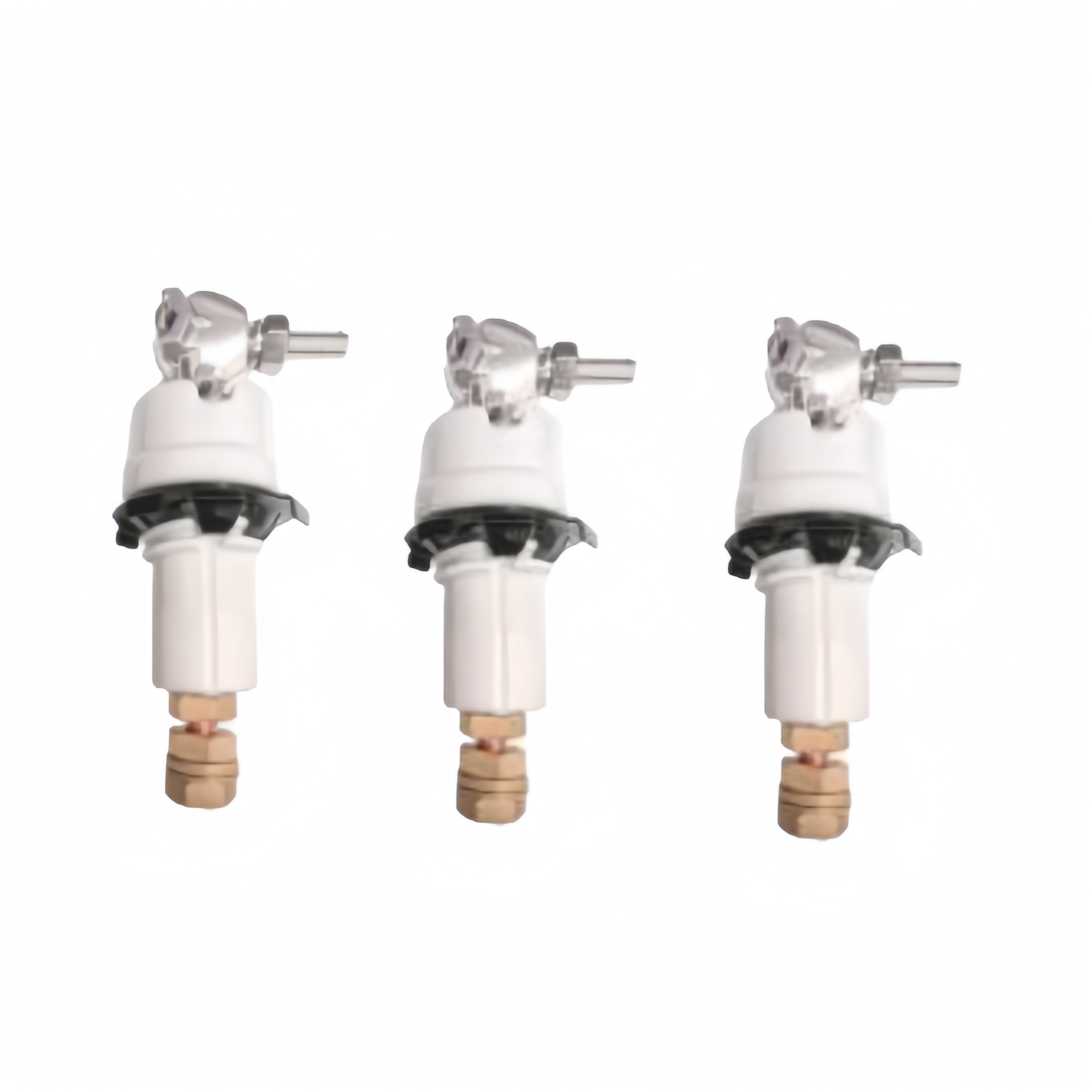
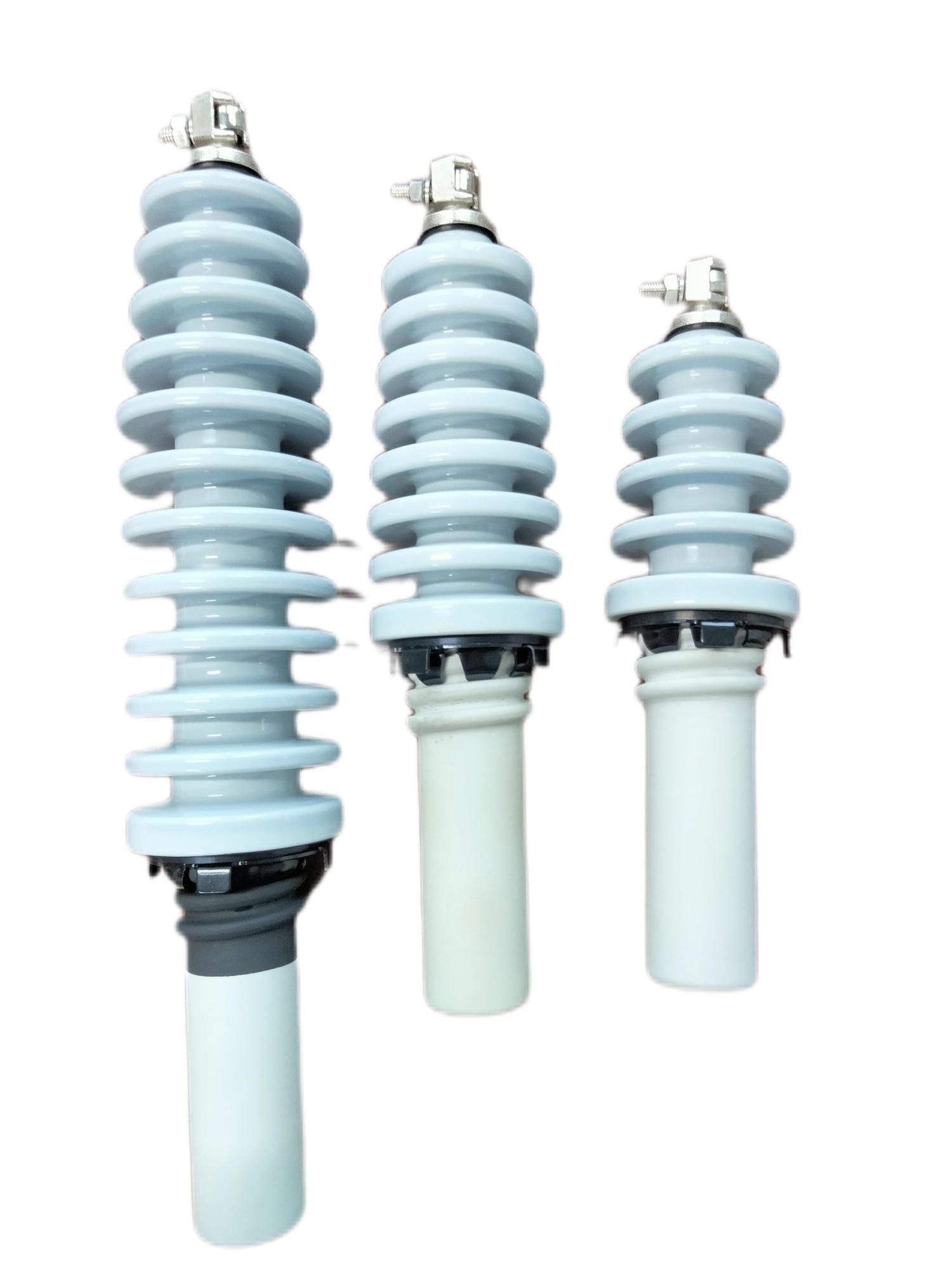
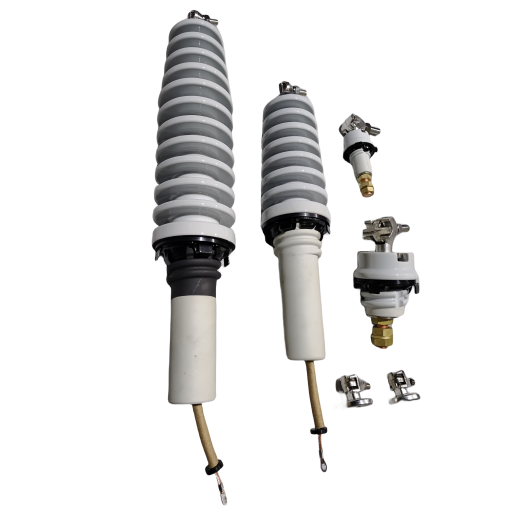
ANSI transformer bushings are standardized insulating and current-carrying components designed for liquid-filled transformers, reactors, and medium-voltage power equipment compliant with American National Standards Institute (ANSI) and IEEE industry regulations. Widely adopted across North American power grids, utility substations, commercial industrial facilities, and pad-mounted distribution systems, ANSI transformer bushings feature unified dimensional layouts, electrical rating rules, insulation requirements, and testing protocols. Understanding core ANSI transformer bushing standards and technical specifications is essential for equipment specification, product selection, engineering design, field installation, and routine maintenance, ensuring full compliance with local grid codes and long-term operational reliability.
Unlike EN-standard bushings developed for European markets, ANSI transformer bushings follow North American power system characteristics, including unique voltage grading, basic impulse insulation levels, creepage standards, and mechanical mounting dimensions. This guide systematically explains official ANSI and IEEE governing standards, core technical specifications, classification rules, service condition limits, and standardized performance requirements, providing a complete technical reference for power engineers, procurement teams, and transformer manufacturers.
Core ANSI and IEEE Governing Standards for Transformer Bushings
All commercially qualified ANSI transformer bushings are manufactured and tested under unified IEEE and ANSI synergized standards, which define terminology, service conditions, rating parameters, design requirements, and full test procedures. The most fundamental standard is IEEE C57.19.00, which specifies general requirements, service ratings, and test procedures for outdoor power apparatus bushings used on oil-filled transformers and reactors. It covers environmental adaptability, mechanical tolerance, and baseline electrical performance for all mainstream ANSI bushing models.
Supplementary standards further refine specialized technical rules. IEEE C57.19.01 focuses on dimensional specifications, mounting structures, and oil-end fitting requirements, ensuring full interchangeability of ANSI transformer bushings from different manufacturers. For DC power system applications, IEEE C57.19.03 provides exclusive test codes and performance criteria for DC-type ANSI bushings. Combined with NEMA industry specifications for low-voltage distribution equipment, these integrated standards form the complete technical system for ANSI transformer bushing production and application.
These unified standards eliminate customized design differences, guarantee consistent quality across suppliers, and simplify utility project approval, equipment replacement, and spare parts management for North American power systems.
Key Technical Specifications of ANSI Transformer Bushings
ANSI transformer bushing specifications cover electrical ratings, insulation levels, mechanical parameters, and environmental tolerance, with fixed grading standards different from European EN bushings. In terms of voltage classification, mainstream ANSI medium-voltage bushings include 15kV, 25kV, and 35kV grades, matching typical North American distribution grid voltage levels. Each voltage grade corresponds to a fixed Basic Impulse Level (BIL), which determines the bushing’s lightning overvoltage resistance capability.
Common ANSI BIL ratings range from 95kV to 200kV for standard distribution models, ensuring stable insulation performance during lightning surges and system switching overvoltages. For current ratings, ANSI transformer bushings cover 200A, 300A, 400A, 600A, 1200A, and 2000A, adapting to different transformer capacity configurations and load demands. All current-carrying cross-sections are standardized to control temperature rise within safe limits during continuous full-load operation.
Creepage distance is another critical standardized specification. ANSI standards define unified minimum creepage values for ordinary, medium-pollution, and heavy-pollution environments. Standard ANSI bushings adopt optimized shed structures to balance anti-pollution performance and structural compactness, suitable for most urban, suburban, and general industrial scenarios in North America. Extended creepage ANSI bushings are specially specified for coastal salt fog areas and heavy industrial pollution zones.
ANSI Bushing Classification and Structural Specifications
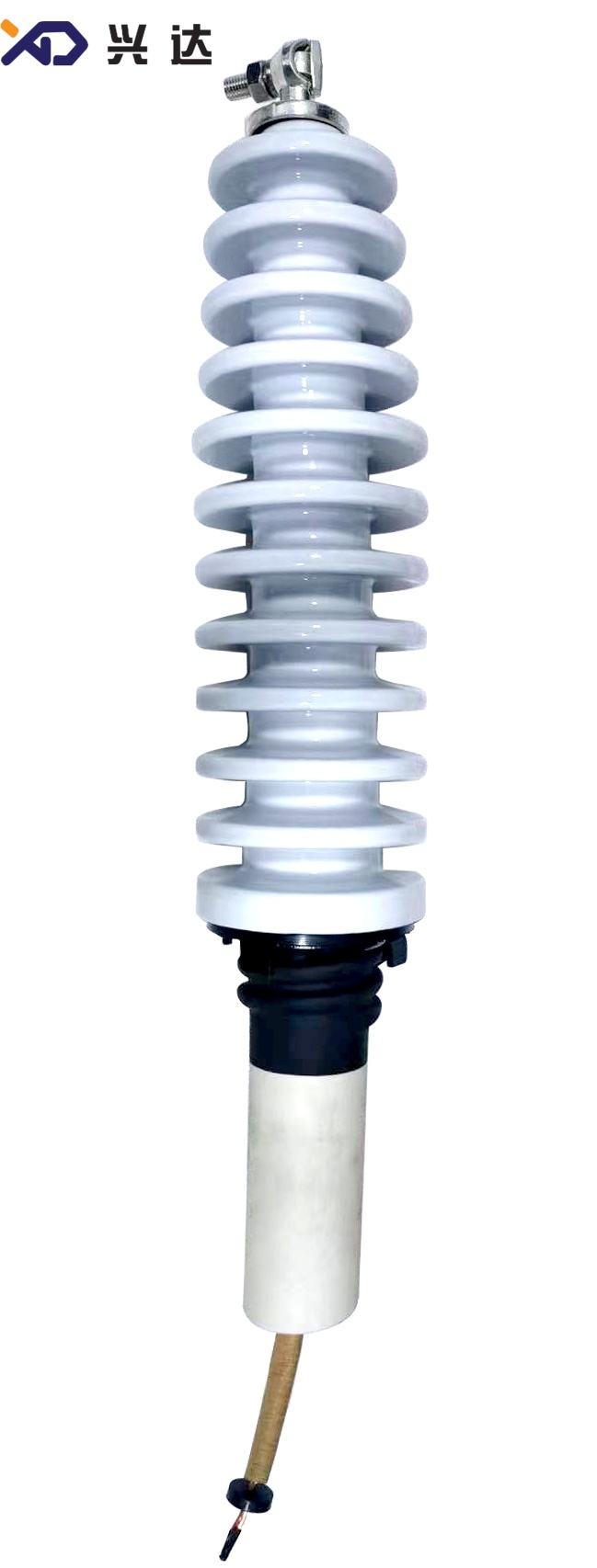
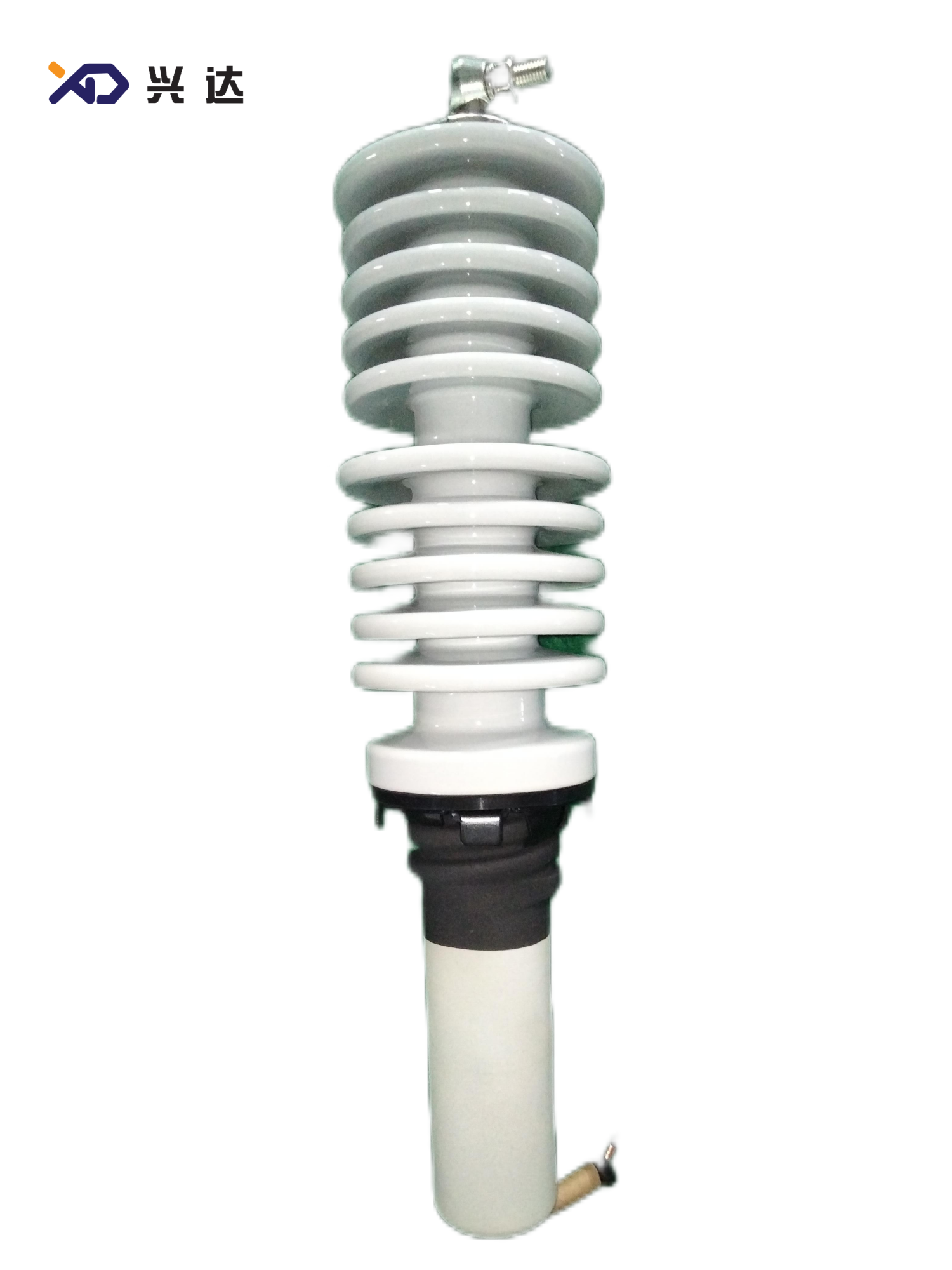
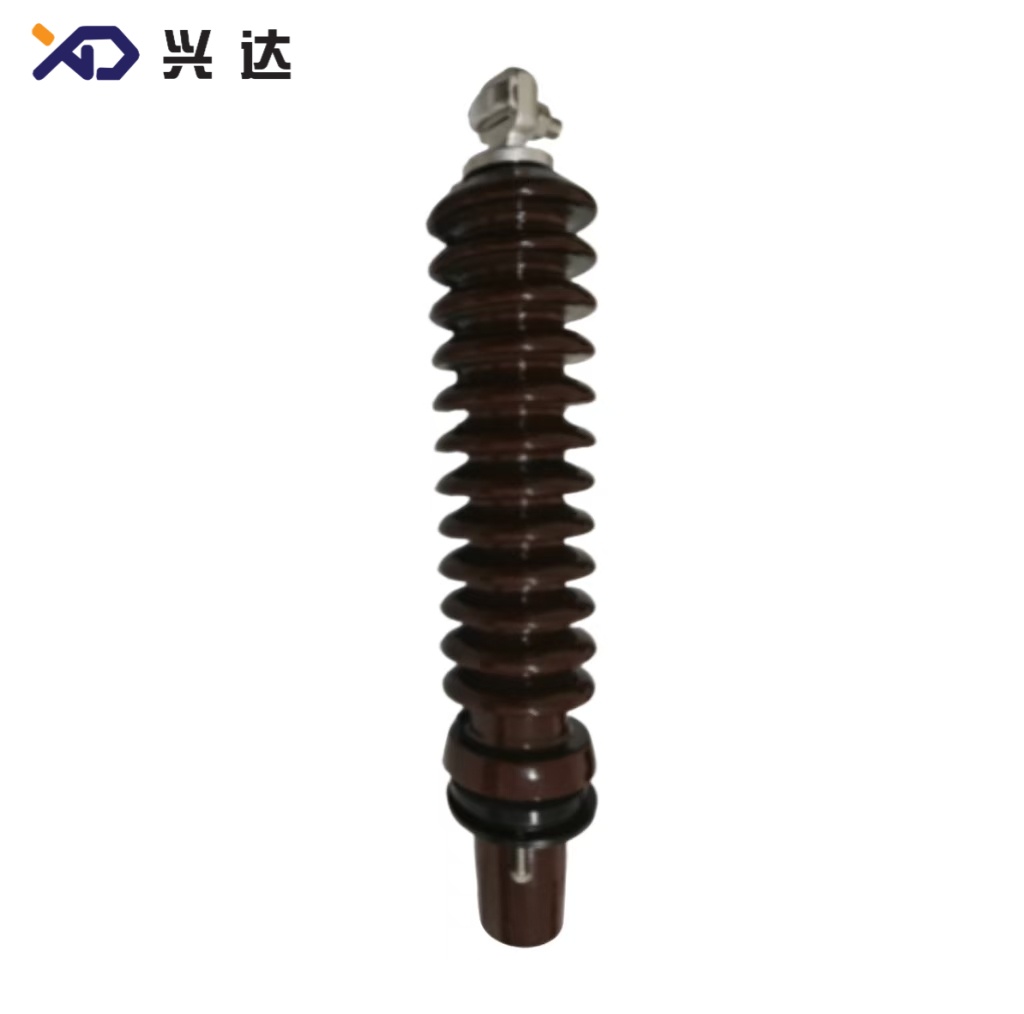
According to insulation materials and structural designs, ANSI transformer bushings are mainly divided into porcelain-type and cast-resin-type structures, both complying with unified ANSI dimensional standards. ANSI porcelain transformer bushings are the most widely used type for outdoor distribution transformers. Featuring high-strength glazed porcelain shells, they deliver excellent UV resistance, tracking resistance, and aging stability under long-term open-air operation. Their rigid mechanical structure and standardized shed arrangement fully meet IEEE outdoor insulation requirements.
ANSI cast resin transformer bushings are lightweight, compact, and crack-resistant, primarily designed for indoor installations, pad-mounted transformers, and dead-front cable box systems. With seamless integral casting structure, these bushings eliminate internal gaps, reduce dust accumulation, and improve operational safety for enclosed power equipment. Although resin bushings have excellent mechanical toughness, ANSI standards restrict their long-term outdoor use due to potential UV aging risks.
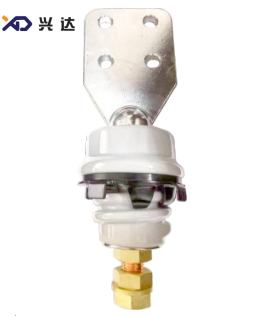
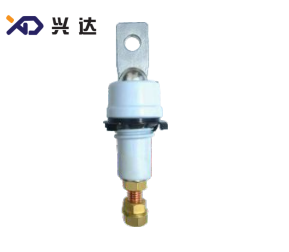
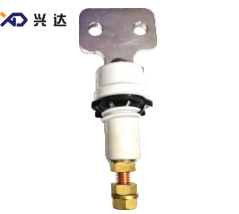
In terms of terminal configuration, ANSI transformer bushings are categorized into eyebolt terminals, flag terminals, and loadbreak insert terminals. Loadbreak-type ANSI bushings are specially specified for North American pad-mounted transformers, supporting safe live-line operation and separable cable connection, which is a distinctive structural feature different from conventional EN bushings.
Standard Service Conditions and Ambient Specifications
ANSI standards clearly define rated service environmental limits for qualified transformer bushings. The standard operating temperature range is -40°C to +55°C, adapting to extreme seasonal temperature changes across most North American regions. The standard applicable altitude is limited to 1000 meters above sea level. For high-altitude areas with lower air dielectric strength, ANSI requires upgraded bushings with enhanced insulation distance and higher BIL values to prevent corona discharge and flashover faults.
In terms of humidity and pollution adaptability, ANSI transformer bushings are rated for continuous operation under non-condensing high humidity conditions. Standard models apply to light and medium pollution environments, while heavy-pollution regions require enhanced ANSI bushings with extended creepage distance and anti-tracking insulation surfaces. These standardized ambient specifications ensure predictable and stable performance in diverse field conditions.
ANSI Standard Testing and Qualification Requirements
To obtain ANSI/IEEE certification, transformer bushings must pass a complete series of standardized type and routine tests. Core test items include power frequency withstand voltage test, lightning impulse withstand test, partial discharge detection, temperature rise test, mechanical tension and torsion test, and sealing tightness test.
The partial discharge test is a key qualification indicator for ANSI transformer bushings, ensuring no invisible internal insulation defects that may cause gradual aging and breakdown. The temperature rise test verifies that the bushing’s current-carrying components and contact parts maintain stable thermal performance under long-term rated load. The sealing test guarantees zero oil leakage and moisture ingress throughout the service life, complying with ANSI oil-immersed transformer system requirements.
Difference Between ANSI and EN Transformer Bushing Specifications
The most obvious difference lies in voltage grading and BIL matching. ANSI systems adopt 15kV, 25kV, and 35kV voltage classes, while EN standards use 12kV, 24kV, and 36kV grading systems. In addition, ANSI bushings have independent mechanical mounting hole spacing, flange dimensions, and terminal standards, resulting in no direct interchangeability with EN bushings. ANSI specifications also place stricter requirements on loadbreak performance and live-line operation adaptability, catering to North American utility maintenance habits.
Conclusion
ANSI transformer bushing standards and specifications form a complete, unified technical system based on ANSI and IEEE industry regulations, covering voltage and current ratings, insulation levels, structural dimensions, environmental limits, and standardized testing rules. Strict compliance with ANSI specifications ensures compatibility, interchangeability, and long-term operational stability for transformers in North American power distribution and industrial systems. Familiarity with ANSI bushing classification, parameter standards, and test requirements helps engineers achieve accurate model selection, standardized installation, and scientific maintenance, effectively improving the safety and reliability of medium-voltage power equipment.
Categories
Contact Us
Contact: Tianjin Delda Trading Co., Ltd
WhatsApp: +86 13662056855
Tel:
E-mail: solomon20210701@tjxddq.com
Add: Unit‑101, Workshop 3, Bozhong Automobile Industrial Park, No.5 Xianghui Road, Intersection of Xianghui Road and Gaoying Road, Beizhakou Town, Jinnan District, Tianjin, China