Transformer Accessories
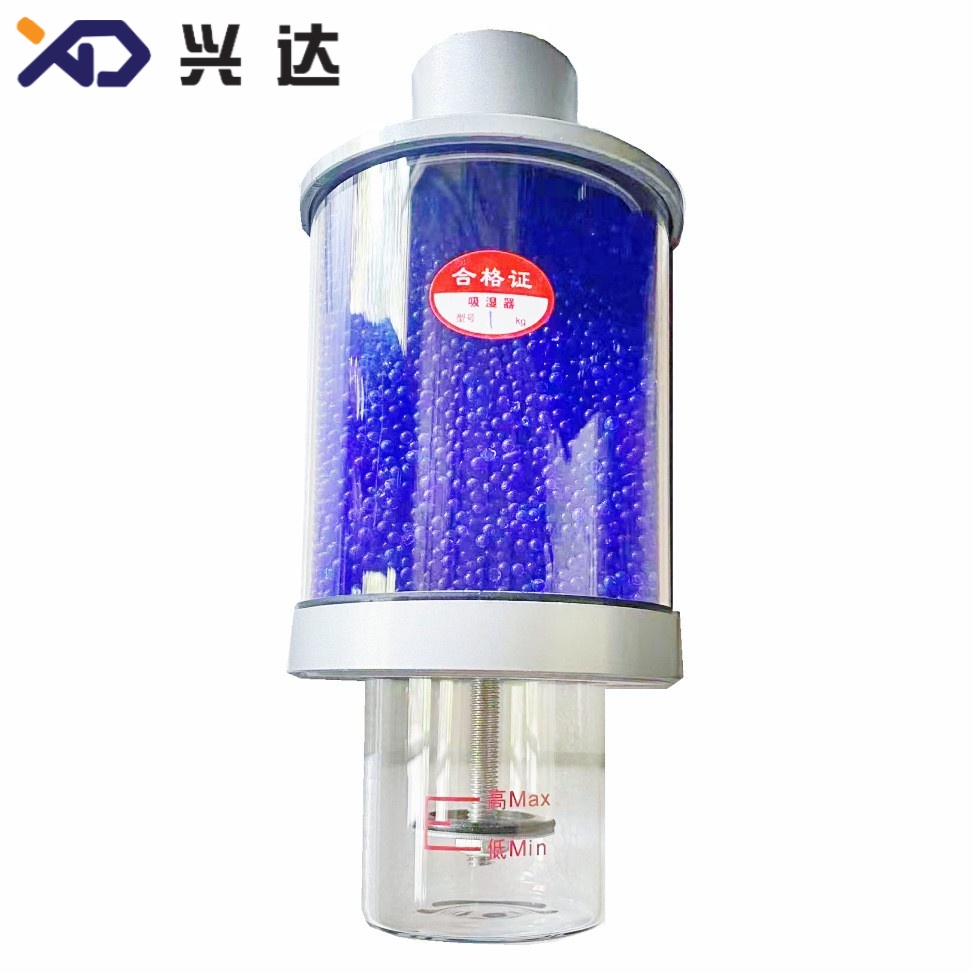
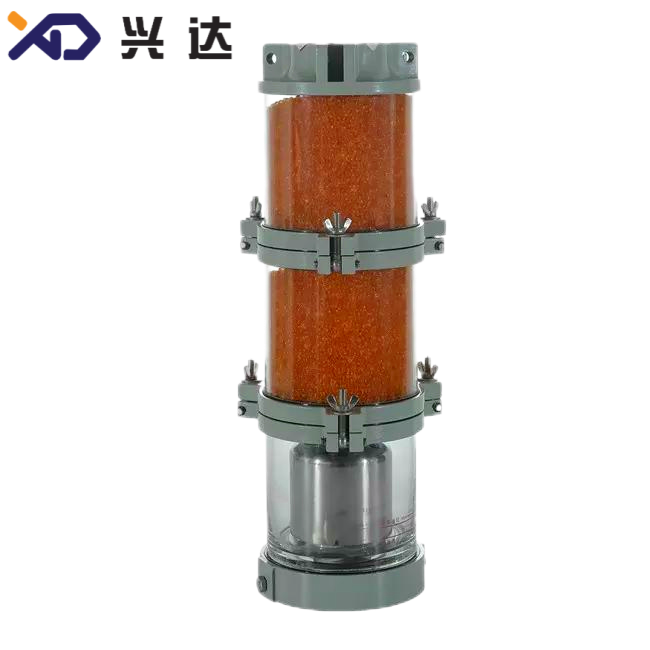
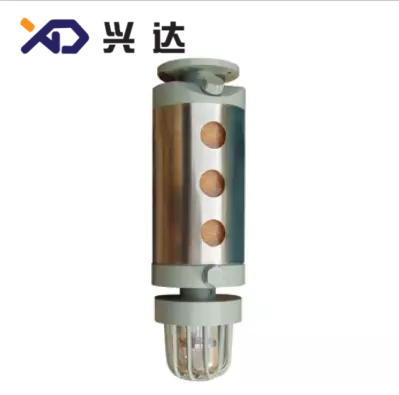
Transformer Moisture Absorber – Silica Gel Transformer Breather for Oil Immersed Transformers
Transformer Moisture Absorber: Complete Technical Guide for Oil-Immersed Transformers
1. Definition of Transformer Moisture Absorber
Most standard transformer moisture absorbers adopt indicating silica gel as desiccant. The silica gel changes colour visibly after absorbing moisture, allowing maintenance teams to judge saturation status without complex testing. High-performance models integrate oil bath dust filtration, transparent observation cylinder, corrosion-resistant metal housing and standard connecting flanges to adapt to global outdoor and indoor substation environments.
2. Basic Structure & Working Principle
2.1 Main Components of Transformer Moisture Absorber
- Top connecting flange / threaded interface: Connects with conservator air pipe
- Protective outer frame: Metal guard preventing collision damage to transparent tube
- Transparent observation cylinder: Glass or acrylic housing for visual silica gel inspection
- Indicating silica gel: Desiccant for capturing water vapour
- Bottom oil cup: Stores transformer oil to filter dust and block large water droplets
Drain plug and sealing gaskets: Maintain air tightness and facilitate maintenance
2.2 Working Mechanism
- Inhalation stage: Cold transformer oil contracts, negative pressure draws external air into the moisture absorber. Air first passes through the oil cup, where dust, insects and coarse impurities are trapped.
- Drying stage: Clean air flows upward through silica gel bed; porous silica gel adsorbs water vapour to produce dry air.
- Dry air enters the conservator and balances internal pressure.
Exhalation stage: Oil expands under heating, internal air flows outward through the absorber. The oil cup avoids direct backflow of silica gel particles into the transformer pipeline.
3. Classification of Transformer Moisture Absorber
| Type | Structural Feature | Desiccant | Typical Application | Key Advantages | Limitations |
|---|---|---|---|---|---|
| Traditional Oil-Cup Moisture Absorber | Standard single cylinder with bottom oil bath | Indicating silica gel | Medium & small distribution transformers, rural substations | Simple structure, low cost, convenient silica gel replacement | Requires regular oil supplement; silica gel saturates quickly in high humidity |
| Dry-Type Transformer Moisture Absorber | No oil cup; equipped with dust filter screen | High-capacity silica gel cartridge | Indoor substations, coastal high-humidity projects | No oil evaporation risk, cleaner operation, less maintenance | Higher procurement price; filter screen needs periodic cleaning |
| Double-Cylinder Moisture Absorber | Two parallel silica gel cylinders, large loading capacity | Indicating silica gel | Large power transformers, EHV transformer conservators | Larger moisture absorption capacity, longer service interval | Larger installation space, heavier weight |
| Smart Self-Regenerating Moisture Absorber | Built-in heating module + humidity sensor | Reusable silica gel | Remote unmanned substations, wind farm transformers | Automatic silica gel regeneration, minimal manual intervention | Complex electronic components, higher failure risk in extreme low temperature |
4. Core Technical Specifications of Transformer Moisture Absorber
| Parameter Item | Specification Description | Common Standard Options |
|---|---|---|
| Silica Gel Loading Capacity | Total weight of desiccant inside absorber | 0.5kg, 1kg, 2.5kg, 3kg, 5kg, 10kg |
| Matching Transformer Oil Volume | Maximum conservator oil capacity for matching model | ≤2000L, 2000–5000L, 5000–10000L, >10000L |
| Connection Type | Installation interface for conservator pipe | Thread connection, flange connection |
| Housing Material | Outer cylinder and protective frame | Acrylic transparent tube, borosilicate glass, aluminium alloy frame |
| Silica Gel Indicator Colour | Colour change threshold for saturation | Blue → Pink; Orange → Green |
| Operating Ambient Temperature | Allowable working temperature range | -40°C ~ +65°C |
| Air Flow Capacity | Maximum allowable breathing air volume | 0.5 m³/h ~ 5 m³/h |
| Protection Grade | Dust and splash resistance for outdoor installation | IP43, IP54 |
Key Selection Notes
- Coastal, tropical and rainforest regions with high relative humidity need to select models with larger silica gel loading capacity.
- Transformers installed at high altitude require verified air flow performance under low atmospheric pressure.
For unattended substation assets, smart regenerating moisture absorbers effectively reduce frequent field maintenance.
5. Importance of Transformer Moisture Absorber for Transformer Lifespan
- Maintain low moisture content in insulating oil, stabilising oil dielectric breakdown voltage
- Prevent hydrolysis of cellulose paper insulation and slow down insulation aging
- Avoid condensation inside conservator and oil tank during temperature fluctuation
- Reduce sludge formation and acid production in aged transformer oil
- Lower probability of partial discharge initiated by water vapour bubbles
- Cut down frequency of transformer oil filtration and drying treatment
Industry operation statistics show that transformers equipped with properly maintained moisture absorbers can extend overall service life by 5–8 years compared with equipment operating without effective air drying protection.
6. Common Faults of Transformer Moisture Absorber & Troubleshooting
| Common Fault | Possible Root Cause | Recommended Countermeasure |
|---|---|---|
| Silica gel turns saturated colour within a short period | High ambient humidity, oil cup missing or oil level too low | Replenish qualified transformer oil; upgrade to larger-capacity absorber |
| Oil cup oil disappears rapidly | Oil evaporation, tiny crack on oil cup, improper sealing | Replace damaged oil cup; check tightness of all sealing joints |
| Blocked air passage | Silica gel powder blocking pipeline, foreign matter entering cylinder | Clean pipeline; add filter gasket above silica gel layer |
| Transparent cylinder crack | Mechanical impact, temperature stress | Install protective frame; replace glass or acrylic cylinder |
| Air leakage at connecting flange | Aging rubber gasket | Replace sealing gasket and evenly fasten bolts |
7. Standard Maintenance Guidelines
- Visual inspection every 1–3 months: Observe silica gel colour, oil cup liquid level and housing integrity.
- Replace or regenerate silica gel immediately once more than two-thirds of beads turn saturated colour.
- Replenish transformer oil in oil cup to standard level; avoid overfilling to prevent oil being sucked into conservator.
- Clean dust and dirt on the outer surface regularly, especially in industrial and coastal polluted areas.
- During transformer overhaul, disassemble and clean the entire moisture absorber assembly, remove silica gel powder and check pipeline smoothness.
Silica gel regeneration method: Heat saturated indicating silica gel at 120°C–150°C in ventilated environment until it recovers original dry colour.
8. Global Application Scenarios
- Transmission and distribution power transformers in urban and rural substations
- Box-type transformers for photovoltaic power stations
- Step-up transformers for onshore and offshore wind farms
- Industrial distribution transformers for chemical plants, mines and steel factories
- Traction transformers for high-speed railway and metro power supply systems
Shunt reactors and voltage regulators equipped with conservator tanks
9. Frequently Asked Questions
Q1: Can transformers without conservator install transformer moisture absorber?
Q2: What is the difference between transformer moisture absorber and air filter?
Q3: How long does indicating silica gel last inside the moisture absorber?
Categories
Contact Us
Contact: Tianjin Delda Trading Co., Ltd
WhatsApp: +86 13662056855
Tel:
E-mail: solomon20210701@tjxddq.com
Add: Unit‑101, Workshop 3, Bozhong Automobile Industrial Park, No.5 Xianghui Road, Intersection of Xianghui Road and Gaoying Road, Beizhakou Town, Jinnan District, Tianjin, China