DIN Bushing
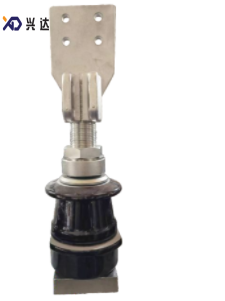
1-3KV/1000-4500A DIN Bushing
Understanding 1~3KV/1000~4500A DIN Transformer Bushings in Modern Electrical Systems
In the world of power transmission and electrical engineering, components that appear small at first glance often play a critical role in the performance, safety, and reliability of the entire system. One such component is the transformer bushing. Among the many specifications available for this essential part, 1~3KV/1000~4500A DIN Transformer Bushings represent an important category used in medium-voltage and high-current applications. These bushings are designed to support the passage of electrical conductors through grounded barriers while maintaining insulation integrity, mechanical strength, and operational stability.
Transformer bushings are not simply connectors. They are carefully engineered insulation devices that allow current to flow from inside a transformer to external circuits without causing leakage, flashover, or excessive heat buildup. In environments where voltage levels range from 1kV to 3kV and current levels can reach from 1000A up to 4500A, the technical requirements become especially demanding. This is why the DIN standard is often referenced: it provides a structured framework for dimensions, performance expectations, and compatibility.
The Function of Transformer Bushings
A transformer bushing serves as a barrier and a conduit at the same time. It lets electrical current pass through a transformer tank or enclosure while preventing electrical contact with the grounded metal structure. Without a proper bushing, the conductor would be exposed to unacceptable insulation risks and the transformer would be unsafe to operate.
For 1~3KV/1000~4500A DIN Transformer Bushings, the challenge lies in handling both voltage and current simultaneously. The voltage level requires robust dielectric insulation, while the current level demands excellent thermal management and low resistance. If either of these aspects is compromised, the bushing may overheat, degrade, or fail prematurely. That is why these components are engineered with precision and tested under strict conditions.
Why DIN Standards Matter
DIN standards are widely recognized in industrial and electrical applications. They help ensure interchangeability, reliability, and consistency in design. When a bushing conforms to DIN requirements, users can expect standardized dimensions, reliable material performance, and compatibility with associated transformer parts.
For engineers and maintenance personnel, this standardization brings several advantages. It simplifies installation, reduces the risk of mismatched components, and improves long-term maintenance planning. In systems that use 1~3KV/1000~4500A DIN Transformer Bushings, conformity to standard dimensions is especially valuable because even small deviations can affect electrical clearance, mounting stability, and sealing performance.
Standardization also supports procurement efficiency. When replacement parts follow the same standard, facilities can reduce downtime and avoid costly custom fabrication. In large industrial plants, substations, and distribution networks, this practical benefit is often just as important as the technical specification itself.
Voltage and Current Considerations
The specification 1~3KV/1000~4500A DIN Transformer Bushings indicates two major performance ranges. The first is voltage rating, which in this case is between 1kV and 3kV. This places the bushing in a medium-voltage category, suitable for many industrial and utility installations. The second is current rating, ranging from 1000A to 4500A, which indicates the component is intended for substantial power transfer.
High current creates heat. The greater the current, the more important it becomes to minimize resistance and manage thermal expansion. A well-designed bushing must maintain stable contact surfaces and use conductive materials that can carry current efficiently. At the same time, the insulation system must prevent breakdown under electrical stress and environmental contamination.
This dual requirement is one of the most complex aspects of bushing engineering. A bushing cannot be optimized for conductivity alone, nor can it focus only on insulation. The design must balance electrical, thermal, and mechanical performance. That balance is what makes high-current DIN bushings particularly valuable in demanding applications.
Typical Construction Features
Although exact designs vary depending on the application, 1~3KV/1000~4500A DIN Transformer Bushings generally include several key elements:
1. Conductor Rod or Terminal
The conductive path carries current through the transformer wall. It is typically made of a material with high conductivity and mechanical durability.
2. Insulating Body
The insulation material surrounds the conductor and isolates it from the grounded structure. This part must resist electrical stress, moisture, pollution, and thermal cycling.
3. Mounting Flange
The flange secures the bushing to the transformer tank or cover. It also contributes to sealing and mechanical support.
4. Sealing System
Reliable sealing prevents oil leaks, moisture ingress, and contamination. In transformer environments, sealing is essential for long service life.
5. Terminal Interface
The external connection point must accommodate cables, busbars, or other conductors. Good interface design reduces contact resistance and improves installation reliability.
These elements work together to ensure that the bushing performs safely under rated conditions. The construction may appear simple from outside, but internally it is the result of careful engineering and material selection.
Materials and Their Importance
Material choice has a major influence on bushing performance. Insulating materials must be resistant to electrical stress and environmental aging. Conductive materials must offer low resistance and withstand high thermal loads. Structural components must maintain dimensional stability over time.
In practical use, bushing materials are often selected based on several criteria:
- Electrical insulation strength
- Heat resistance
- Mechanical durability
- Moisture resistance
- Chemical stability
- Aging performance
- Ease of maintenance
A high-quality bushing should remain stable even after years of temperature fluctuations, load variations, and environmental exposure. In outdoor or industrial settings, the insulation system must also resist dust, humidity, vibration, and pollution. This is especially relevant for 1~3KV/1000~4500A DIN Transformer Bushings, because higher current can intensify thermal aging if the materials are not well chosen.
Installation and Maintenance
Proper installation is crucial for any transformer bushing. Even a well-designed product can fail if installed incorrectly. Mounting torque, gasket placement, terminal connection quality, and surface cleanliness all influence performance.
Before installation, technicians should verify:
- The bushing rating matches the application
- Dimensions conform to the mounting interface
- Insulation surfaces are clean and undamaged
- Seals are intact
- Electrical connections are properly tightened
During operation, routine inspection helps detect early signs of deterioration. Maintenance personnel often look for discoloration, cracking, oil leakage, unusual heating, corona evidence, or loose terminals. In high-current environments, thermal imaging can be a useful diagnostic method because it helps identify abnormal temperature rise before serious failure occurs.
For facilities using 1~3KV/1000~4500A DIN Transformer Bushings, preventive maintenance is particularly important. Since these components carry large currents, a small defect can escalate quickly into a major interruption. Regular inspection reduces risk and extends service life.
Applications in Industry and Power Distribution
Bushings in this rating range are used in a variety of electrical systems. They may appear in transformers serving manufacturing plants, utility distribution networks, commercial facilities, renewable energy installations, and heavy industrial equipment. Their role is especially important where compact design and reliable current transfer must coexist.
Typical applications include:
- Power distribution transformers
- Industrial step-down transformers
- Switchgear interface assemblies
- Rectifier systems
- Specialized equipment requiring medium-voltage connection
- Heavy-duty electrical substations
Because these bushings can handle significant current, they are well suited for systems with demanding load profiles. Industries with motors, process machinery, and continuous operations often rely on stable transformer connections to avoid production interruptions. In these contexts, a bushing is not just a passive component; it is a critical link in the energy chain.
Safety and Reliability Factors
Electrical safety is one of the main reasons transformer bushings are so carefully designed. A failure in the bushing can lead to insulation breakdown, arcing, equipment damage, and shutdowns. In severe cases, the failure may create fire hazards or threaten nearby personnel.
To improve safety, engineers consider:
- Creepage distance
- Clearance distance
- Thermal limits
- Mechanical support
- Contamination resistance
- Dielectric strength
- Aging performance
The reliability of 1~3KV/1000~4500A DIN Transformer Bushings depends on how well these factors are addressed during design and manufacturing. Testing is typically carried out to verify dielectric withstand, temperature rise, and mechanical integrity. Only after passing these checks can a bushing be considered suitable for demanding service.
The Importance of Long Service Life
In power systems, downtime is expensive. Replacing a transformer bushing can require system shutdown, labor, and testing, all of which increase operational cost. For this reason, service life is one of the most valued characteristics in bushing selection.
Long service life is achieved through proper design, quality materials, and suitable operating conditions. When a bushing is exposed to excessive moisture, contamination, overloading, or poor maintenance, its lifespan decreases significantly. That is why users should always match the bushing rating to actual operating conditions rather than selecting a component based on voltage alone.
A well-maintained 1~3KV/1000~4500A DIN Transformer Bushings unit can deliver stable performance over many years, supporting both operational continuity and reduced maintenance expense. This long-term reliability is one of the reasons such bushings remain essential in modern electrical infrastructure.
Conclusion
The role of transformer bushings in power systems is often underestimated, but their importance cannot be overstated. They are the bridge between internal transformer conductors and external electrical networks, ensuring safe current transfer while maintaining insulation and structural integrity. In medium-voltage, high-current applications, 1~3KV/1000~4500A DIN Transformer Bushings provide a standardized and dependable solution that supports a wide range of industrial and utility needs.
Their value lies in a combination of engineering precision, material quality, standard compliance, and long-term reliability. From voltage control and current carrying capability to sealing, installation, and maintenance, every detail matters. As electrical systems continue to demand greater efficiency and safety, properly designed bushings will remain indispensable components in the infrastructure that powers modern life.
| 代号 (Code) | 型号 Model | 尺寸(Dimensions) | 箱盖 开孔 opening | 干弧 arolng disteance | 爬距 oreep distance | 伞形 shield | 重量 Weight (kg) | |||||||||||||
| H | h2 | h3 | h4 | a3xa4 | a1xa2 | d4 | t | Md | d1 | d2 | d3 | S | S1 | d0 | h¹ | |||||
| XD.1000.1.DIN | DIM-1/1000 | 324 | 58 | 17 | 4~8 | 60x60 | 26×26 | φ14 | 10 | M30*2 | 90 | 110 | 90 | 70 | 50 | 56 | 57 | 75 | 1单伞 | 5.5 |
| XD.2000.1.DIN | DIN-1/2000 | 405 | 63 | 22 | 6~10 | 100x100 | 50x40 | φ14 | 15 | M42*3 | 104 | 125 | 105 | 100 | 60 | 70 | 58 | 70 | 1单伞 | 12 |
| XD.3150.1.DIN | DIN-1/3150 | 434 | 68 | 27 | 6~10 | 120x120 | 60x40 | 中14 | 15 | M48*3 | 125 | 150 | 125 | 110 | 60 | 90 | 57 | 75 | 1单伞 | 16.5 |
| XD.1000.3.DIN | D1M-3/1000 | 372 | 78 | 17 | 4~8 | 60x60 | 26x26 | φ14 | 10 | M30*2 | 110 | 110 | 90 | 70 | 50 | 56 | 87 | 120 | 1单伞 | 6.5 |
| XD.2000.3.DIN | DIM-3/2000 | 460 | 83 | 22 | 6~10 | 10100 | 50:40 | φ14 | 15 | M42*3 | 125 | 125 | 105 | 100 | 60 | 70 | 89 | 120 | 1单伞 | 13.5 |
| XD.3150.3.DIN | DIM-3/3150 | 495 | 88 | 27 | 6~10 | 120×120 | 60×40 | φ14 | 15 | M48*3 | 145 | 150 | 125 | 110 | 60 | 90 | 88 | 120 | 1单伞 | 18.7 |
| XD.4500.3.DIN | DIN-3/4500 | 560 | 101 | 30 | 6~12 | 150x150 | 70x70 | φ18 | 20 | M55*3 | 175 | 160 | 一 | 160 | 100 | 119 | 95 | 125 | 1单伞 | 33.5 |
Categories
Contact Us
Contact: Tianjin Delda Trading Co., Ltd
WhatsApp: +86 13662056855
Tel:
E-mail: solomon20210701@tjxddq.com
Add: Unit‑101, Workshop 3, Bozhong Automobile Industrial Park, No.5 Xianghui Road, Intersection of Xianghui Road and Gaoying Road, Beizhakou Town, Jinnan District, Tianjin, China