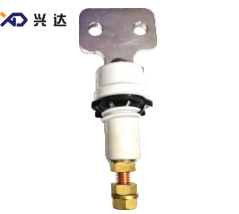
Porcelain Insulators
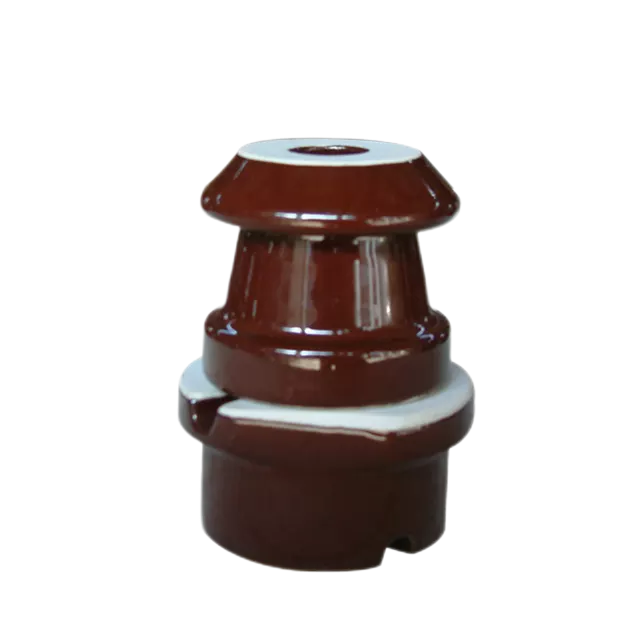
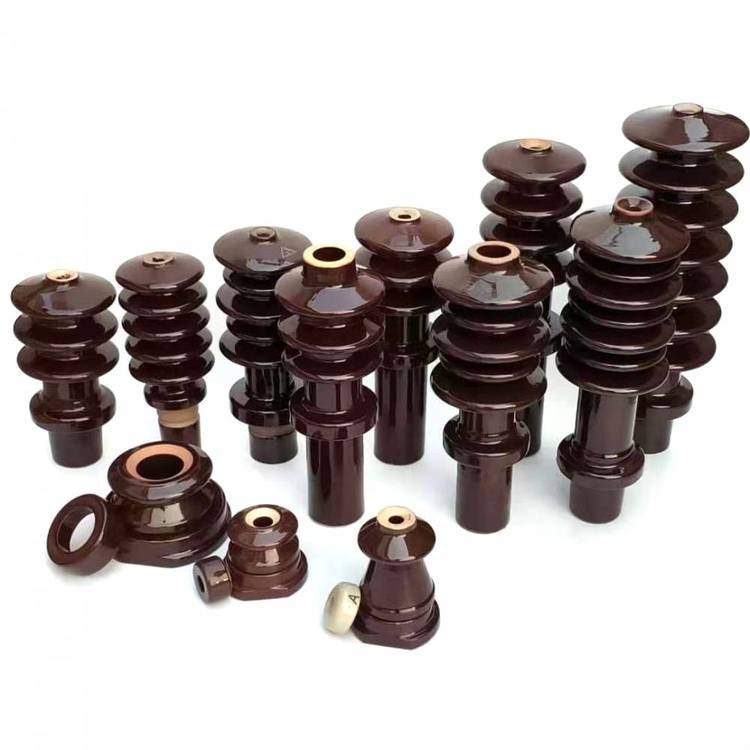
INSULATOR & Aislador
绝缘子
定义:
绝缘子是安装在不同电位的导体之间或导体与地电位构件之间的器件,能够耐受电压和机械应力作用。它是一种特殊的绝缘控件, 能够在架空输电线路中起到重要作用。早年间绝缘子多用于电线杆,慢慢发展于高型高压电线连接塔的一端挂了很多盘状的绝缘体,它是为了增加爬电距离的,通常由玻璃或陶瓷制成,就叫绝缘子。绝缘子不应该由于环境和电负荷条件发生变化导致的各种机电应力而失效,否则绝缘子就不会产生重大的作用,就会损害整条线路的使用和运行寿命。
简介:
绝缘子(insulator)长约几百个核苷酸对,是通常位于启动子同正调控元件(增强子)或负调控因子(为异染色质)之间的一种调控序列。绝缘子本身对基因的表达既没有正效应,也没有负效应,其作用只是不让其他调控元件对基因的活化效应或失活效应发生作用。
方向性:
绝缘子的作用是有方向性的,这是在果蝇实验中发现的。果蝇(D.melanogaster)的黄色基因座y上插入转座子gypsy后,会造成有些组织中的y基因失活,但有些组织中y基因仍然有活性,其原因在于转座子gypsy的一端有一个绝缘子序列。当gypsy在》/基因座的不同位置上插入时,对基因的活性有不同的效应。这是因为y基因的活性受4个增强子调控,当绝缘子正好插在启动子的上游时,就在翅肩(wing blade)和躯体上皮(body cuticle)组织中阻断基因的活化(来自上游的增强子),但不阻断在刚毛(bristles)和跗足(farsal claws)组织中y基因的表达(来自下游的增强子)。由于有些增强子位于启动子上游,有些位于下游,所以绝缘子的效应并不取决于绝缘子同启动子的相对位置。因此,对绝缘子效应的方向性的原因还没有真正弄清楚。目前已发现有两个基因座以反式活化方式影响绝缘子的功能。基因S2J(Hw)编码的核蛋白识别绝缘子,绝缘子同其结合后才有绝缘作用。当该基因突变后,尽管y基因座中插入了绝缘子,但失去了绝缘作用,y在所有组织中都表达。另一个基因座是mod(mdg 4),该基因发生突变后,其效应正好与Su(Hw)相反,即这些突变型都增强了绝缘作用,使绝缘子的绝缘效应不再有方向性而得到扩展,也就是阻断了上游和下游两侧的增强子的效应。有一种解释认为先是Su(Hw)同绝缘子DNA结合后,使绝缘子有绝缘效应。mod(mdg4)同Su(Hw)结合,使绝缘子失去绝缘效应;突变的mod(mdg4)不能同Su(Hw)结合,于是绝缘子又增强了绝缘作用。
Insulator
Definition:
An insulator is a device installed between conductors at different potentials or between a conductor and a ground-potential component, capable of withstanding voltage and mechanical stress. It is a specialized insulating component that plays a crucial role in overhead power transmission lines. In the early days, insulators were primarily used on utility poles. Over time, they evolved to be suspended in large numbers—often in a disc-like configuration—at one end of tall high-voltage transmission towers to increase the creepage distance. Typically made of glass or ceramic, these components are known as insulators. Insulators must not fail due to various electromechanical stresses caused by changes in environmental and electrical load conditions; otherwise, they would fail to fulfill their critical function and compromise the operational life of the entire transmission line.
Introduction:
An insulator is approximately several hundred nucleotide pairs in length and is a regulatory sequence typically located between a promoter and a positive regulatory element (enhancer) or a negative regulatory factor (heterochromatin). The insulator itself has neither a positive nor a negative effect on gene expression; its sole function is to prevent other regulatory elements from exerting their activating or inactivating effects on the gene.
Directionality:
The function of insulators is directional, a finding discovered in fruit fly experiments. When the gypsy transposon is inserted into the y locus of the fruit fly (D. melanogaster), it causes the y gene to be inactivated in some tissues, while it remains active in others. This is because one end of the gypsy transposon contains an insulator sequence. When gypsy is inserted at different positions within the y locus, it has varying effects on gene activity. This is because the activity of the y gene is regulated by four enhancers. When the insulator is inserted precisely upstream of the promoter, it blocks gene activation in the wing blade and body cuticle tissues (due to the upstream enhancers), but does not block y gene expression in the bristles and tarsal claws (due to the downstream enhancers). Since some enhancers are located upstream of the promoter and others downstream, the effect of the insulator does not depend on its relative position to the promoter. Therefore, the reason for the directionality of the insulator’s effect has not yet been fully elucidated. Currently, two loci have been identified that influence the function of the insulator through trans-activation. The gene S2J(Hw) encodes a nuclear protein that recognizes the insulator; the insulator exerts its insulating effect only after binding to this protein. When this gene is mutated, the insulator loses its insulating function even though it is inserted into the y locus, and the y gene is expressed in all tissues. The other locus is mod(mdg4). When this gene mutates, its effect is exactly the opposite of that of Su(Hw); that is, these mutant forms enhance the insulator function, causing the insulator’s effect to lose its directionality and become expanded—in other words, blocking the effects of enhancers on both the upstream and downstream sides. One explanation suggests that Su(Hw) first binds to the insulator DNA, thereby conferring its insulating effect. mod(mdg4) binds to Su(Hw), causing the insulator to lose its insulating effect; a mutated mod(mdg4) cannot bind to Su(Hw), so the insulator’s insulating effect is once again enhanced.
Aislador
Definición:
Un aislador es un dispositivo que se instala entre conductores con diferentes potenciales eléctricos o entre un conductor y un elemento con potencial de tierra, y que es capaz de soportar la acción de la tensión eléctrica y las tensiones mecánicas. Se trata de un componente aislante especial que desempeña un papel importante en las líneas aéreas de transmisión eléctrica. En sus inicios, los aisladores se utilizaban principalmente en postes eléctricos; con el tiempo, se fue desarrollando su uso en torres de alta tensión, en cuyos extremos se colgaban numerosos aisladores en forma de disco con el fin de aumentar la distancia de fuga. Normalmente están fabricados en vidrio o cerámica, y se denominan «aisladores». Los aisladores no deben fallar debido a las diversas tensiones electromecánicas provocadas por los cambios en las condiciones ambientales y de carga eléctrica; de lo contrario, no cumplirían su función esencial y perjudicarían la vida útil y el funcionamiento de toda la línea.
Introducción:
El aislador (insulator) tiene una longitud de unos cientos de pares de nucleótidos y es una secuencia reguladora que suele situarse entre el promotor y un elemento regulador positivo (enhancer) o un factor regulador negativo (heterocromatina). El aislador en sí mismo no tiene ningún efecto, ni positivo ni negativo, sobre la expresión génica; su función consiste únicamente en impedir que otros elementos reguladores ejerzan su efecto de activación o inactivación sobre el gen.
Direccionalidad:
La función del aislador es direccional, tal y como se descubrió en experimentos con la mosca de la fruta. Tras la inserción del transposón gypsy en el locus y del gen de la coloración amarilla de la mosca de la fruta (D. melanogaster), se produce la inactivación del gen y en algunos tejidos, mientras que en otros sigue estando activo; esto se debe a que uno de los extremos del transposón gypsy contiene una secuencia aislante. Cuando el transposón gypsy se inserta en diferentes posiciones del locus y, tiene efectos distintos sobre la actividad del gen. Esto se debe a que la actividad del gen y está regulada por cuatro potenciadores; cuando el aislador se inserta precisamente aguas arriba del promotor, bloquea la activación del gen en los tejidos del hombro alar (wing blade) y de la cutícula corporal (body cuticle) —gracias a los potenciadores situados aguas arriba—, pero no impide la expresión del gen y en los tejidos de las cerdas (bristles) y las garras tarsales (farsal claws) —gracias a los potenciadores situados aguas abajo—. Dado que algunos potenciadores se encuentran aguas arriba del promotor y otros aguas abajo, el efecto del aislador no depende de la posición relativa de este respecto al promotor. Por lo tanto, aún no se ha aclarado del todo la causa de la direccionalidad del efecto del aislador. Actualmente se han identificado dos loci que influyen en la función del aislador mediante activación trans. La proteína nuclear codificada por el gen S2J(Hw) reconoce al aislador, y este solo ejerce su función aislante tras unirse a ella. Cuando se produce una mutación en dicho gen, aunque se inserte el aislador en el locus del gen y, se pierde la función aislante y el gen y se expresa en todos los tejidos. El otro locus es el mod(mdg 4); cuando este gen sufre una mutación, su efecto es exactamente opuesto al de Su(Hw), es decir, estas mutaciones potencian la función de aislamiento, lo que hace que el efecto del aislador deje de ser direccional y se amplíe, bloqueando así los efectos de los potenciadores tanto aguas arriba como aguas abajo. Una explicación sostiene que, en primer lugar, Su(Hw) se une al ADN del aislador, lo que le confiere su efecto aislante. mod(mdg4) se une a Su(Hw), lo que hace que el aislador pierda su efecto aislante; el mod(mdg4) mutado no puede unirse a Su(Hw), por lo que el aislador vuelve a potenciar su función aislante.
Traducción realizada con la versión gratuita del traductor DeepL.com
Categories
Contact Us
Contact: Tianjin Delda Trading Co., Ltd
WhatsApp: +86 13662056855
Tel:
E-mail: solomon20210701@tjxddq.com
Add: Unit‑101, Workshop 3, Bozhong Automobile Industrial Park, No.5 Xianghui Road, Intersection of Xianghui Road and Gaoying Road, Beizhakou Town, Jinnan District, Tianjin, China